The best way to learn event photography is one decision at a time. The Reels below keep the beginner roadmap exact to the Foundations domain instead of forcing a wrong carousel category.
Once you have the roadmap, keep the checklist close. Foundations work is about staying oriented before the room starts pulling your attention in ten directions.
What Event Photography Really Is
At its most basic, event photography is the documentation of noteworthy social gatherings — weddings, corporate conferences, galas, birthdays, graduations, and parties. But calling it documentation alone is far too small for what the job actually asks of you.
A strong event photographer blends two modes at once. They shoot documentary coverage — moving through the event capturing real, unscripted moments as they unfold. And they also create setup-based shots — organized portraits, group photos, and branded scenes that the client needs.
The word photography comes from two roots: photo (light) and graphy (writing). Photography is literally writing with light. When you photograph an event, you are creating a deliberate interpretation of the world based on what you chose to observe, frame, and preserve.
EP101 organizes this philosophy around a single guiding equation:
The EP101 Equation: Physical Light × Ethereal Light. Physical Light is what you shape on the outside — gear, settings, flash. Ethereal Light is what you shape from the inside — warmth, empathy, presence. A technically perfect photo of a guest who looks uncomfortable is a failed event photograph. Both kinds of light matter, and they multiply, not add.
The Four Domains of Event Photography
The craft is too large to learn all at once, so EP101 divides it into four domains. Think of them as four rooms in the same house. Each is a distinct skill set you can study independently:
- 📝 1. Foundations — the philosophy layer. What photography is, what events are, and the mapping system that ensures your gallery feels complete rather than random.
- 📷 2. Technical Skills (Physical Light) — gear, camera settings, ambient light, and flash. What lets you walk into a dark room and come out with clean, well-exposed photos.
- ✨ 3. Creative Skills (Physical Light) — framing, composition, and editing. Arranging the frame to guide attention, and enhancing moments in post-production. Editing is alchemy, not rescue surgery.
- 🤝 4. Hospitality Skills (Ethereal Light) — etiquette, body language, tonality, posing, and reading a room. The domain most beginners ignore entirely.
Guests mirror the photographer's energy. If you are calm, warm, and confident, people relax and give you better photographs. If you are tense and rushed, every frame shows it.
Understanding Why People Host Events
To serve a client well, you need to understand what they actually want — and what they want is never just a folder of photos. They want proof, memory, emotion, status, relief... usually some messy mixture of all of them. In practice, those motives usually cluster into two broad types:
- Status-driven hosts want photographs that serve as social proof — images showing they are respected, admired, successful, or stylish. Emphasize prestige, create flattering portraits, and capture them as the center of attention.
- Purpose-driven hosts want genuine connection, family warmth, and the story of a journey. Focus on candid emotions, supportive interactions, and milestone moments that carry personal significance.
Ask early: 'What does success look like to you?' Listen for whether they talk about image and perception (status) or people and connection (purpose). Let that understanding shape which moments you prioritize and how you edit them.
The same event, shot for two different motivations, produces two very different galleries. Only one of them will make the client happy.
The Eight Event Essentials Checklist
A complete event gallery is not a random collection of whatever caught your eye. It is a purposeful experience built from eight coverage categories. Use this checklist as your map before, during, and after every shoot... because if you miss a category, no amount of editing can bring it back.
- 🎨 Wide establishing shots — set the scene, scale, and atmosphere. Ground the viewer in the venue before anything else happens.
- 📖 Details and decorations — the host's taste, effort, and personality. Cake, signage, table settings. Photograph early, before the room gets messy.
- 👾 Portraits — the headliners. Solos, couples, and immediate family groupings in their best light.
- 🤝 Random roaming group shots — the social dynamics, friendships, and supporting characters who made the event feel alive.
- 🎉 Formalities — the must-not-miss beats: speeches, cake cutting, awards. Moments that crystallize the host's transition into a new identity.
- 💠 Bokehlicious candids — heavily blurred backgrounds that isolate raw emotion and make ordinary guests feel like movie stars.
- 🕺 Groovy drunk dance photos — raw energy and fluid motion, often using shutter drag to smear light across the frame.
- 🎤 Extras — vendors, DJs, suppliers. The after-credit scenes that over-deliver and build future business relationships.
Your pre-event checklist: Write down all eight categories before the event. During the shoot, mentally tick them off. After the event, review your gallery against the list. If any category is missing, you know exactly what to look for next time.
How to Prepare for Your First Event
Your first event will feel overwhelming without a plan... and surprisingly manageable with even modest preparation. Preparation is not about eliminating fear — it is about giving fear less room to operate. It breaks down into three parts:
Clarify Expectations First
Confirm in writing before anything else:
- Event type and timeline
- Shot list and must-have moments
- Deliverables and final image count
- Turnaround time
The paperwork is there to protect the photography. It gives the job a clean frame, so you can focus on photographing instead of second-guessing once the event begins.
Scout the Venue
Arrive early. Walk the space before it fills with people:
- Check lighting in each room
- Locate power outlets for charging
- Identify stages and backdrops
- Map safe paths for moving without disrupting guests
Pre-visualize where you will stand for key moments, so you are not improvising under pressure when they arrive.
Build a Portfolio Before You Charge
Start with warm circles — friends, family, local businesses, schools, nonprofits. Offer a discounted soft launch in exchange for portfolio use. You need 8-12 strong images across a few event types to show prospective clients what you can do.
Gather testimonials after every shoot. Social proof is what turns early gigs into a steady stream of referrals.
How Weddings, Corporate, and Party Events Differ
The fundamentals transfer across event types, but each has a different emphasis:
- 💐 Weddings — candid emotions, intimate portraits, timeline-driven moments that cannot be repeated. You adapt from bright outdoor ceremonies to dim evening receptions. No reshoots. Emotional investment is total.
- 💼 Corporate — brand moments, speaker portraits, audience engagement. Clean, polished images for PR and marketing. Sharpness and professional finish matter more than moody artistry.
- 🎉 Parties — energy and celebration. Dynamic moments, crowded dance floors, fast social interactions. Challenging lighting with colored gels and sudden changes. Settings and flash must be dialed in before the energy peaks.
The Five Biggest Beginner Mistakes
Beginners tend to make the same handful of mistakes. All of them are avoidable — and knowing them in advance is the cheapest education you will ever get.
1. Skipping the Shot List
Avoid: Walking in without a confirmed shot list. A moment missed at an event is gone permanently.
2. Overlooking Lighting
Many venues have mixed lighting that shifts from room to room. Beginners shoot on full auto and hope for the best.
Practice adjusting white balance and exposure deliberately. Learn to read a room's light before you start shooting seriously in it.
3. Shooting Only Posed Photos
A gallery made entirely of organized group shots feels stiff and lifeless. Blend documentary candid coverage with your setup shots to create a fuller story.
4. Poor Post-Event Workflow
Beginners deliver late because they have no system for culling, editing, and delivery.
Do this: Standardize your file organization, editing approach, and delivery steps. Set a realistic turnaround time and communicate it upfront. Delivering early delights clients. Delivering late without communication erodes every bit of goodwill you built.
5. Neglecting the Human Side
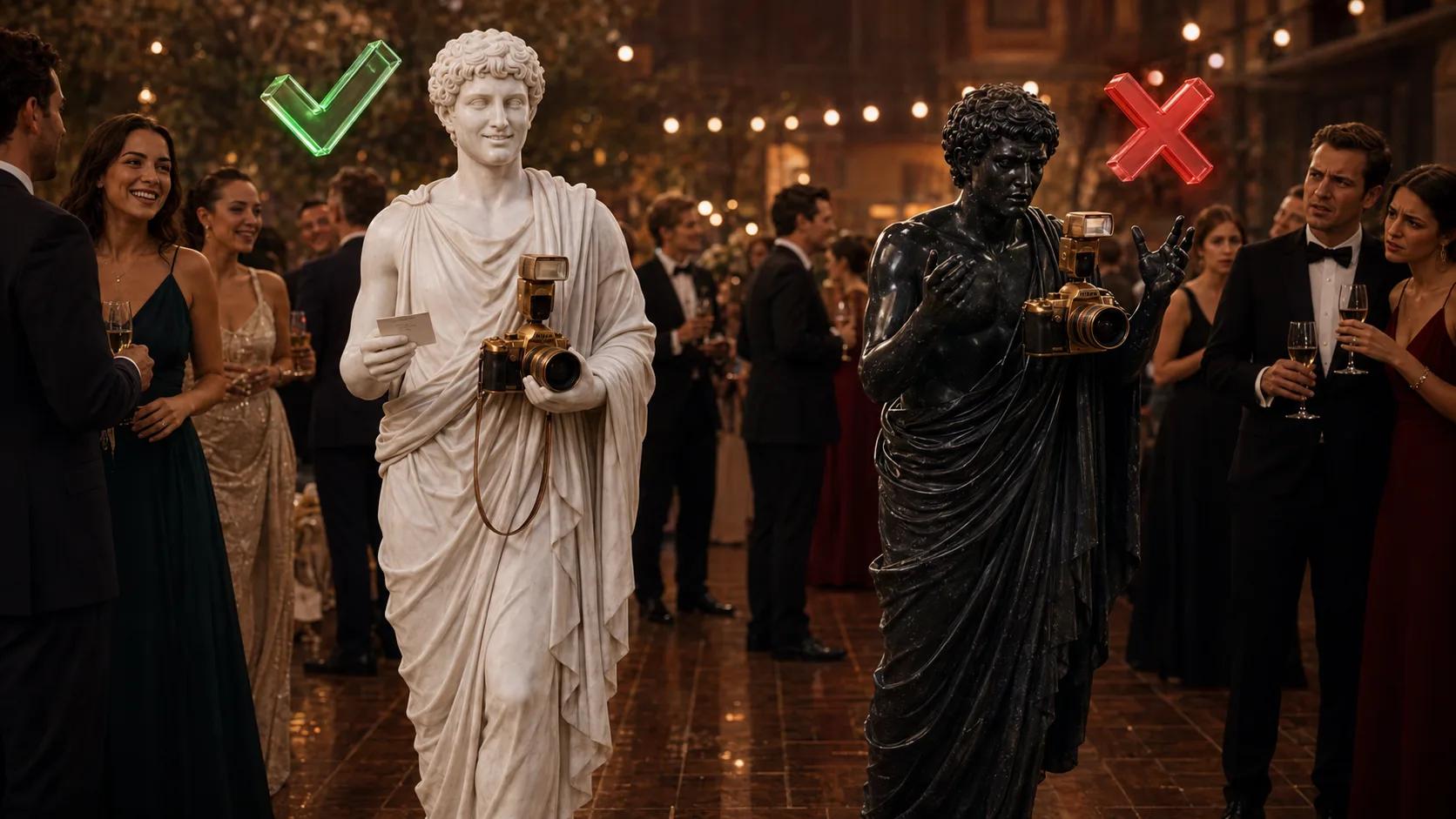
The most important mistake. Beginners focus entirely on gear and settings and forget that event photography is a hospitality job performed with a camera. The camera is the tool. The people are the job.
If you learn to be calm, warm, and genuinely present, your photographs will improve more than any new lens could ever accomplish. The Ethereal Light is not a metaphor. It is a real, practical skill — and it is what separates photographers who get rebooked from photographers who do not.
Where to Go From Here
You now have the map: four domains, eight essentials, and the five mistakes to avoid. The next step is depth. Pick one domain and go deep:
- Struggling with flash? Read the Flash Guide — bounce techniques, TTL vs manual, drag-and-burn.
- Awkward with posing? Read the Posing Guide — the cake metaphor, the Sexy Six, polarity.
- Anxious around strangers? Read the People Skills Guide — confidence as weather, the 7-step warmth framework.
- Need the right gear? Read the Gear & Settings Guide — the exposure pentagon.
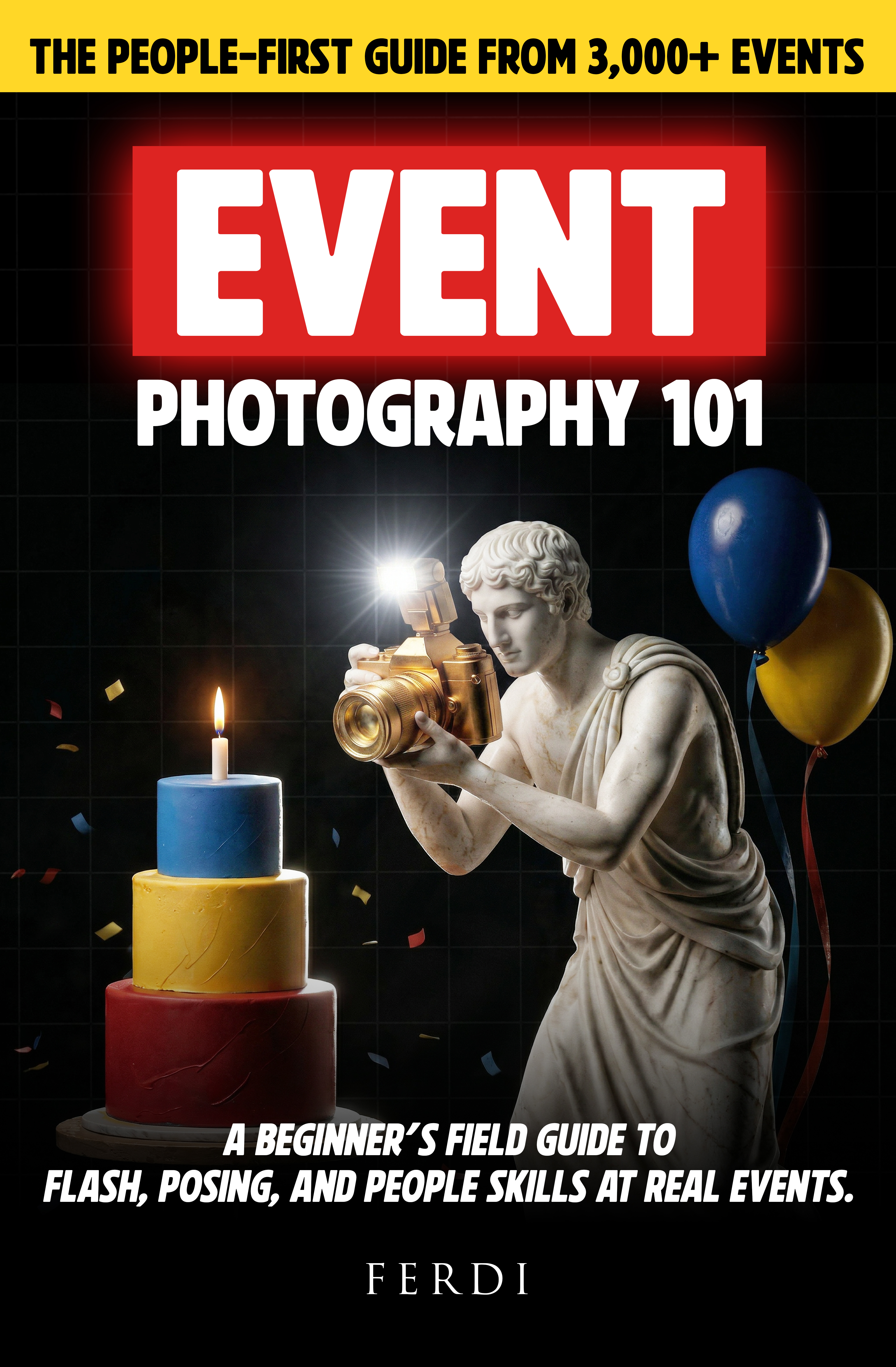
Or get the complete system in one place — Event Photography 101, the book built from 3,000+ real events.